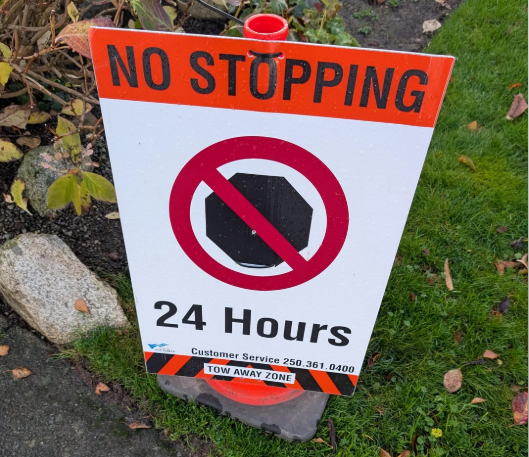
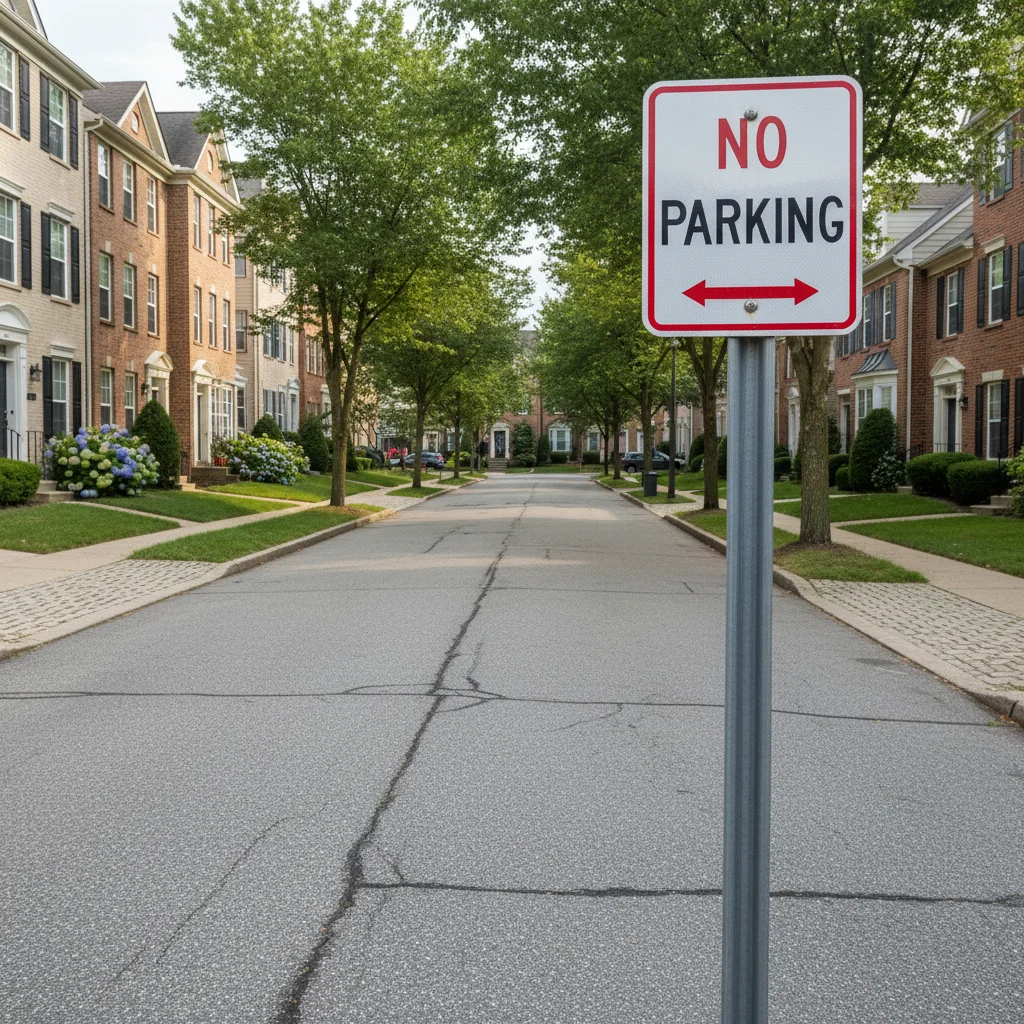
Victoria wants to create more housing, support more transportation choices and make it easier
for people to live without owning a vehicle. Those are good goals to work towards.
There are individuals and families in Greater Victoria who are already car-free or genuinely
want to live that way. Housing designed around that choice should be supported. But approving
a development without resident parking does not, by itself, make the people who live there car-
free.
That difference is important.
If a development is approved on the assumption that its residents will not own vehicles, the
City should put measures in place to support that outcome, reinforce it and determine whether
it is actually being achieved. Otherwise, the development may provide no parking while its
residents simply park on surrounding public streets.
That is not car-free housing. It is housing that shifts its parking demand onto a limited public
asset.
A Current Example in Burnside Gorge
A development proposed for 3106 Balfour Avenue includes ten family-sized townhouses—five
two-bedroom and five three-bedroom homes—on a residential lot previously occupied by one
detached home.
The proposal includes one accessible parking space and one car-share space, but no regular
resident parking. The transportation package required by the City includes bicycle parking, a
car-share vehicle, memberships and usage credits. The City has accepted these measures in
support of the conclusion that the development’s parking demand will be reduced.
These measures may help some residents live without a vehicle. But they do not ensure that
the people who eventually buy or rent the homes will be car-free.
This is particularly important for family-sized housing. A family’s ability to live without a vehicle
can depend on work locations, school and childcare arrangements, disabilities, caregiving
responsibilities and access to reliable transportation when it is needed.
The concern is not theoretical. The streets around Balfour, Irma, Maddock and Albany already
experience significant pressure from existing apartments, reduced-parking developments,
commuters using the neighbourhood as a park-and-ride, construction workers and vehicles
displaced from nearby residential-parking zones. Residents have repeatedly dealt with blocked
driveways and limited usable curb space. Our parking bylaw officers know these problems well.
More than 30+ households have now raised concerns about the Balfour development, the lack
of a site-specific parking assessment and the absence of any commitment to measure
conditions before and after occupancy.
The City’s response to our concerns consisted largely of general policy explanations and what
appears to be an assumption that the people who choose to live in this development will not
own cars. It did not provide the neighbourhood-specific evidence we requested.
Residents do not own the street in front of their homes. Public curb space is a shared public
asset. But precisely because it is shared and limited, the City has a responsibility to manage it
fairly and plan for the combined effects of its development decisions. Those decisions should be
based on neighbourhood-specific assessments and evidence, not assumptions.
Support Is Not the Same as Accountability
Bicycle parking, car-share vehicles and transit incentives are useful supports. They make car-
free living more possible for people who choose it. But support alone is not accountability.
The City has not committed to measuring parking conditions before and after the Balfour
development is occupied. It has not explained what would happen if its assumptions prove
wrong or if several residents regularly park vehicles on nearby streets. There is also no clear
answer about who would be responsible for responding to the resulting pressure or who would
pay for that response.
Without monitoring or enforceable requirements, the risk is transferred away from the
developer and onto the surrounding neighbourhood. Residents are then left trying to document
the problem after it has already occurred.
A better approach would establish clear expectations before people purchase or rent the
homes.
A Practical Solution: Permit-Ineligible Car-Free Housing
Victoria is currently reviewing its parking policies. The City says its Parking Update is intended to
address growing demand for limited curb space and will include public engagement on a new
residential parking program.
This creates an opportunity for a practical solution, one suggested by a very thoughtful resident
in our neighbourhood and submitted to the City for consideration. If the City establishes a
residential permit system, homes in developments approved as car-free or without resident
parking could be made ineligible for residential street-parking permits.
The City cannot and should not dictate whether someone owns a vehicle. It can, however,
decide how access to limited public curb space is managed.
The parking condition should be:
clearly disclosed before anyone purchases or rents a home;
included in purchase agreements and rental information;
established through a covenant registered on the property, where legally possible, or
another binding mechanism that carries forward to future owners and occupants; and
supported by City parking rules that make the affected addresses ineligible for
residential permits.
The covenant and the parking rules would serve related but different purposes. The City’s
parking program would determine who is eligible for a permit. A covenant or other title-based
measure would help preserve and disclose the condition when a property is sold. This approach
would not prevent someone from owning a vehicle, nor would permit ineligibility alone prevent
parking on every unrestricted street. But it would close an obvious gap by ensuring that a
development approved without resident parking could not later rely on residential parking
permits as replacement parking.
Most importantly, the condition would be known before people make the decision to live there.
People who need resident parking could make an informed housing choice, while individuals
and families who genuinely want car-free living would have better access to homes designed
and supported for that purpose.
Making Car-Free Housing More Honest
Permit ineligibility would create a clear distinction between two very different things:
1. A development intentionally designed and supported for car-free living.
2. A development that simply provides no resident parking and assumes its residents will
not own vehicles.
That distinction would make it more likely that car-free housing is purchased or rented by
people who choose that lifestyle and for whom it will work.
There are families who genuinely want to live car-free. Housing designed for that purpose
should be available to them rather than simply being marketed as less expensive housing with
an unstated expectation that surrounding streets will provide the missing parking. The rules and
disclosure need to be clear from the beginning.
Where Do the Financial Savings Go?
We are continually told that parking is expensive to build. One of the arguments for reducing
parking requirements is that developers can avoid those costs, provide less expensive housing
and pass the savings on to future residents. But lower construction costs do not automatically
lead to lower sale prices or rents.
Unless affordability is secured in some way, the homes can still be sold or rented at whatever
the market will bear. The avoided cost may become an added financial benefit for the
developer, with no requirement or accountability to pass the savings on to the people who
eventually live there.
If those residents then park on nearby streets, public curb space becomes the replacement for
the parking the developer was permitted not to provide. In that situation, the cost has not
disappeared. It has been shifted:
the developer avoids the cost of providing parking;
the homes are not necessarily made meaningfully more affordable;
individuals and families seeking genuinely car-free housing may have to compete with
people who still require parking;
the neighbourhood absorbs the additional parking demand; and
the City and taxpayers may later bear the cost of managing the resulting pressure.
If reduced parking is justified as an affordability measure, the City and the developer should be
able to demonstrate whether the savings reach purchasers or tenants. If it is justified as a way
to create car-free housing, the City should be able to show whether the development remains
car-free after occupancy.
Otherwise, neither promised outcome is guaranteed.
Measure Whether the Policy Works
A credible car-free housing policy should include more than assumptions made when a
development is approved.
The City should:
measure existing curb capacity and parking use before approval;
consider parking conditions during the day, evenings and weekends;
assess the combined effects of nearby developments and existing restrictions;
monitor conditions after occupancy;
establish a clear process for reporting spillover;
explain what evidence would trigger action; and
report publicly on whether car-free measures are working.
This information would allow the City to improve its policies over time. It would also help
distinguish isolated complaints from a measurable neighbourhood problem.
Burnside Gorge, particularly the area around Balfour, Irma, Maddock and Albany, would make a
useful case study for the City’s Parking Update. Establishing a baseline now would allow the City
to track what happens as more low- and no-parking developments are built and occupied.
Supporting the Outcome We Say We Want
This is not an argument against new housing, car-free living or expanded transportation
choices. It is an argument for accountability.
If the City wants car-free developments to succeed, it should create the conditions and
accountability needed for them to succeed. That means providing realistic transportation
alternatives, being honest with purchasers and tenants, setting clear parking rules, measuring
the results and responding when those results do not match the assumptions.
Making developments approved as car-free ineligible for residential street-parking permits
would be one concrete step. Pairing that rule with clear disclosure and a covenant, or another
binding measure, would help ensure that the commitment continues when homes change
hands.
A development without resident parking is not automatically car-free. If that is the outcome
being promised, the City and the developer should be accountable for making it real.
written by Michelle Peterson, a resident of the Burnside Gorge neighbourhood